Golden South Sea Pearl
| White South Sea Golden Pearl | |
|---|---|
| Chemical Formula: | Calcium Carbonate |
| Main Components: | Aragonite, Conchiolin |
| Luster: | Pearlescent |
| Hardness: | 2.5-4.5 |
| Refractive Index: | 1.52-1.69 |
| Specific Gravity: | 2.6-2.9 |
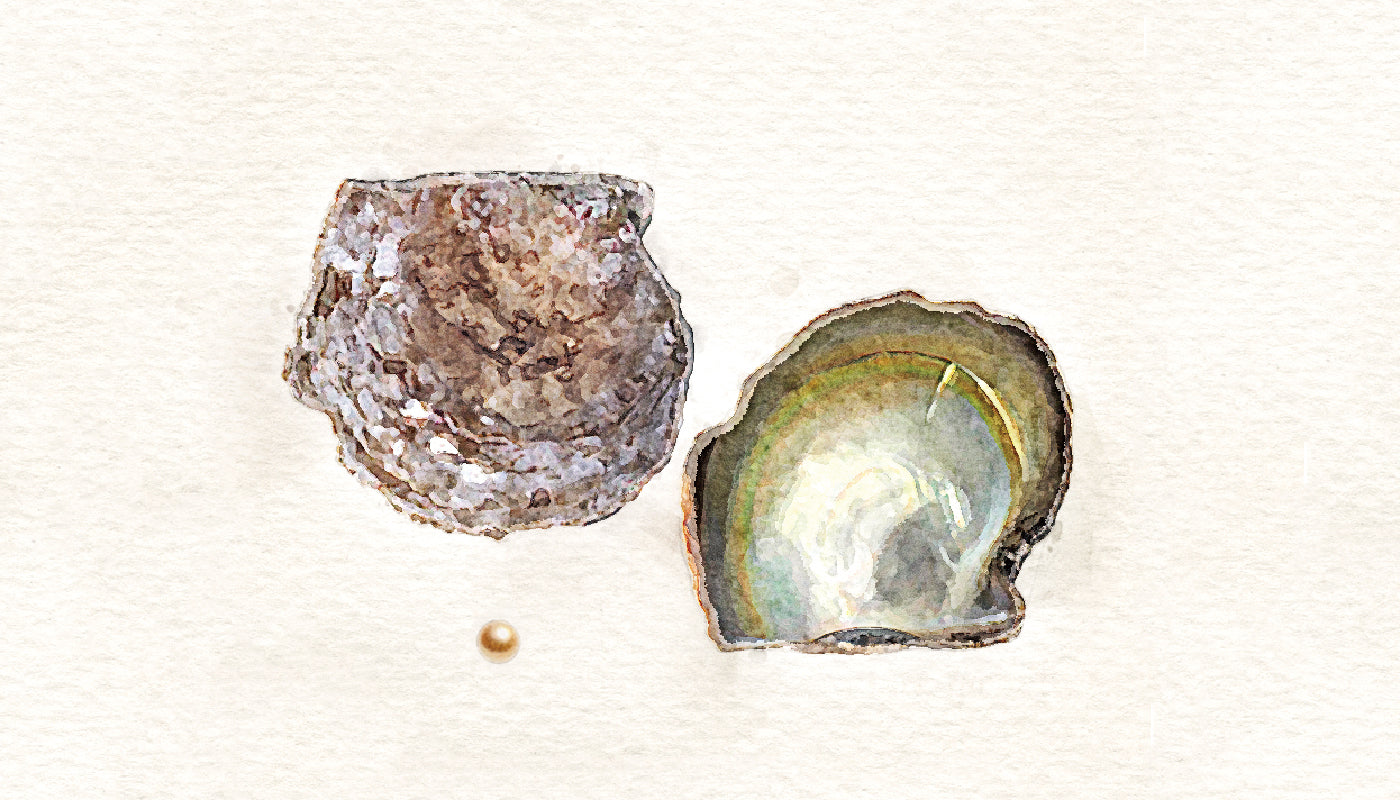
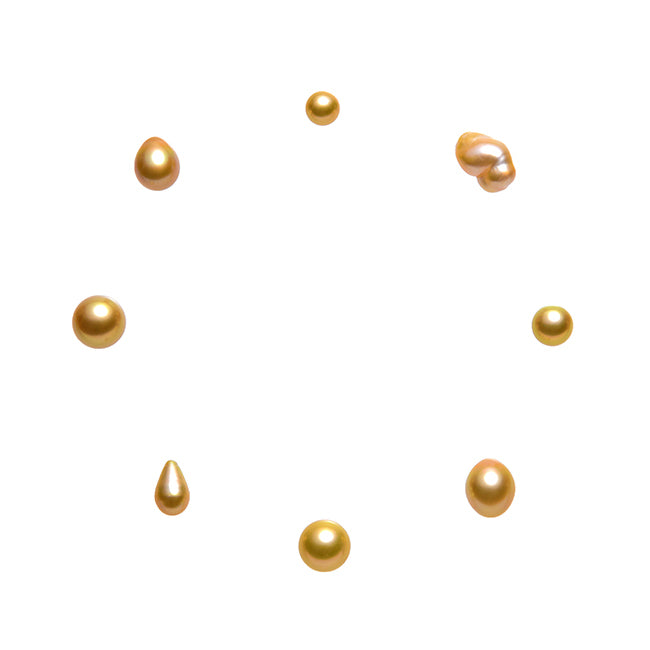
These are yellow-gold colored saltwater pearls harvested from the gold-lipped Pinctada maxima oyster, whose inner shell is golden, even among White South Sea pearls.
The main producing regions are Myanmar, the Philippines, and Indonesia.
Myanmar pearls often have a greenish-gold color, while pearls from the Philippines tend to have a reddish-gold color, showing distinct color characteristics depending on the origin.
Among them, beautiful deep gold colors are extremely rare and have a high market value.
Gold-lipped White South Sea pearls are generally smaller than silver-lipped ones, with sizes primarily ranging from 8mm to 17mm, and those exceeding 20mm being extremely rare.
Cultivation of Golden Pearls
The golden pearl cultivation industry began in Myanmar in 1954 when Mikimoto of Japan established a pearl farm in the Mergui Archipelago.
Thanks to a natural environment favorable for pearl cultivation and advanced techniques honed through Akoya pearl cultivation in Japan, they succeeded in a unique nucleation process, leading to the production of Myanmar pearls.
Subsequently, golden pearl cultivation also began in the Philippines in the 1990s, and recently the quality has significantly improved, with pearl production exceeding 3 million pieces annually since 2011.


